What genuinely improves with price
- Hinges. Spring hinges and better-machined barrels survive daily handling; cheap hinges loosen and eventually wobble.
- Frame material. Titanium, memory alloys and engineering polymers return to shape after being bent; cheap acetate cracks and cheap wire stays bent.
- Manufacturing consistency. Higher-volume budget lines have more variation between units, which is why two people can have very different experiences of the same product.
- Warranty and returns. At the premium end you are buying a company that will replace a failed pair without a fight. At the bottom you are buying a listing.
- Disclosure. A few premium brands publish per-lens filtering figures. That is more than most of the category offers, even if the figures are still their own.
What does not improve with price
The evidence. The 2023 Cochrane review found blue-light filtering lenses may not reduce eye-strain symptoms compared with ordinary lenses, and it did not find that expensive lenses were the exception — price was not the variable that separated the trials. There is no version of this product where paying more converts an unsupported claim into a supported one.
Optical clarity also plateaus early. Modern polycarbonate and CR-39 lenses from any reputable manufacturer are optically fine for ordinary use. Above that, you are paying for coatings, thinness at high prescriptions, and finish.
| Budget (roughly under $25) | Premium (roughly $60+) | |
|---|---|---|
| Frame construction | Basic acetate or wire; screws loosen over time | Better hinges, more durable materials, holds adjustment |
| Consistency | Varies between units | More consistent |
| Warranty | Marketplace returns window, if that | Often a year or more, with a company behind it |
| Filtering disclosure | Rarely any real data | Sometimes published figures, still self-reported |
| Evidence for the filtering benefit | Not supported | Not supported |
| Sensible reason to choose it | You want to try the idea cheaply | You want frames that survive daily abuse |
Where we would actually put the money
If your budget is around $70, our view is that an eye exam and a properly fitted prescription is a better purchase than a premium non-prescription filtering frame — because the prescription has a clear mechanism behind screen fatigue and the filter does not. That decision is covered here.
If you already know your eyes are fine and you simply want glasses that will last, the premium end is a reasonable place to buy frames. Just be clear with yourself that you are buying frames.
Both ends of the range
So you can see the actual gap: one is a frame that does the job, the other is a frame that will outlast it. Neither filters to a proven benefit.

Best Budget
TIJN Blue Light Frames
Usually under $25
The cheap way to find out whether you will actually wear these. Ordinary frames, ordinary price, no pretence.
Check current priceRead the full review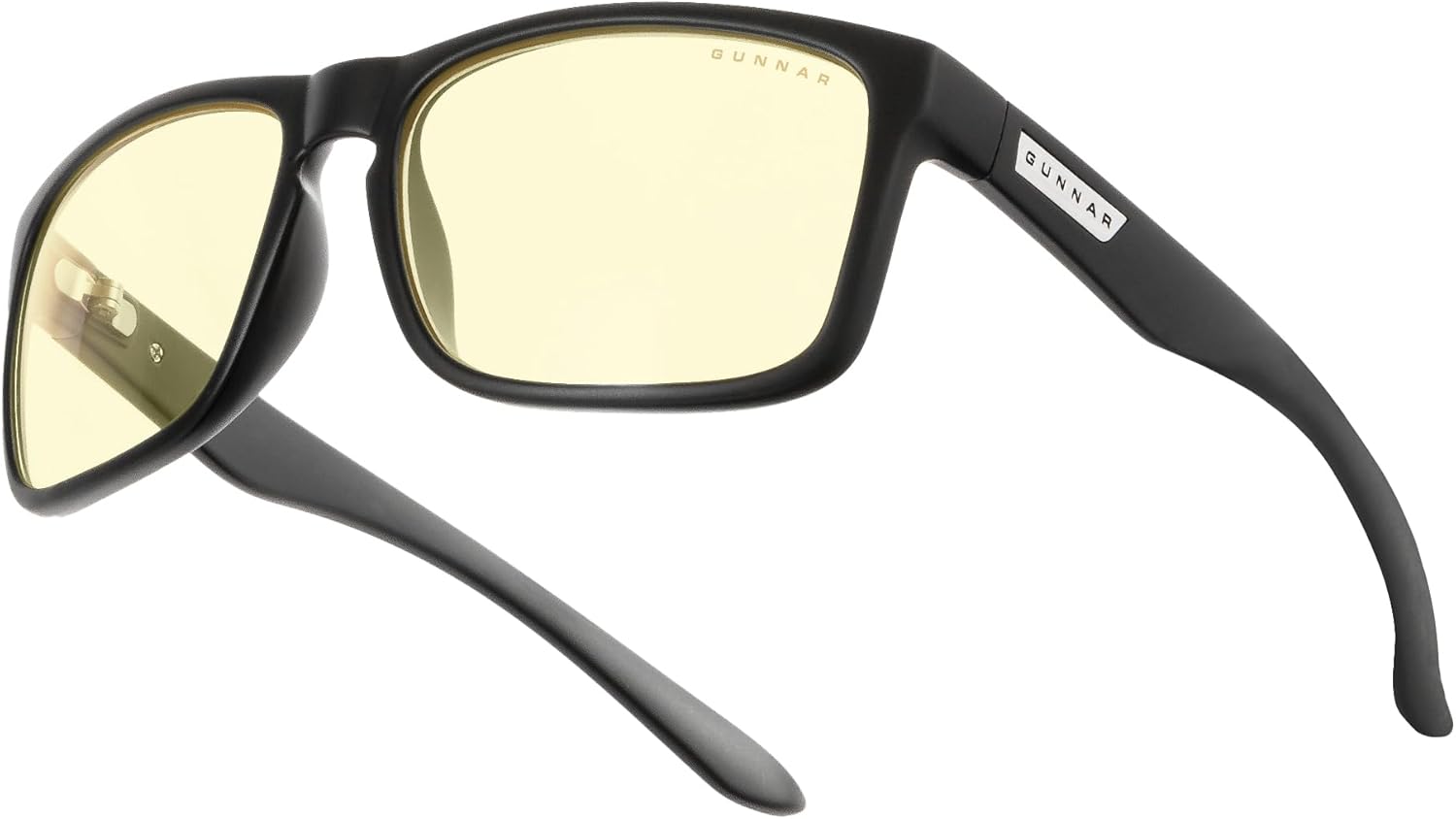
Best Overall
GUNNAR Gaming Eyewear
Usually $60 and up
The frame that lasts, from the one brand that publishes its numbers. Buy it once you know you will wear a pair.
Check current priceRead the full review
Affiliate links — we earn a commission if you buy, at no extra cost to you, and it does not change what we recommend. How we evaluate · disclosure
The full write-ups are on our picks page.