Reviews GUNNAR
GUNNAR Gaming Eyewear review
- Lens tint
- Amber on most models, clear on some
- Price
- Usually $60 and up
- Reviewed
- August 2026
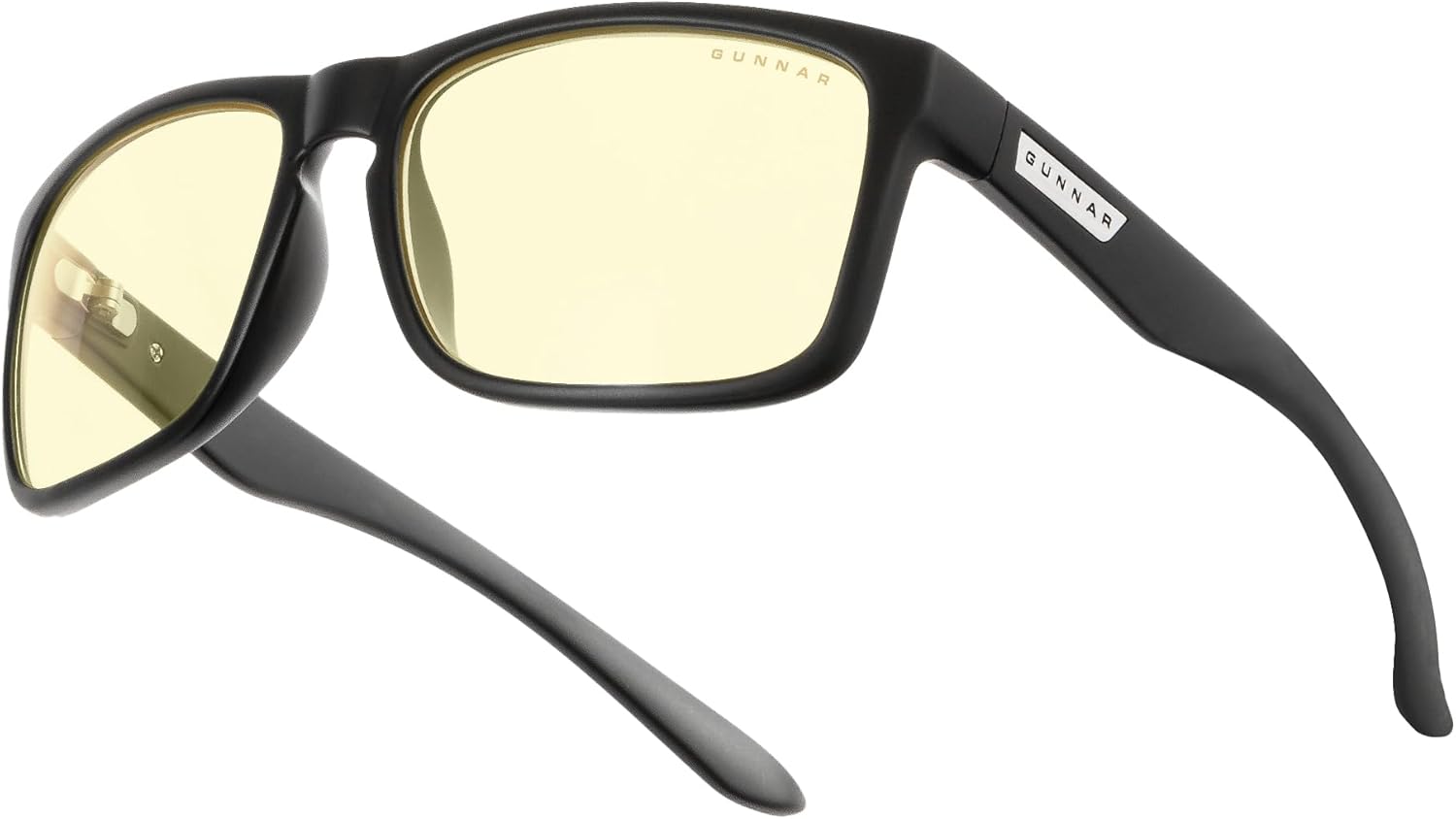
Product photo from the Amazon listing we link to below.
The retailer links below are affiliate links. If you buy through one, we earn a commission at no extra cost to you. It does not change which product we recommend, and it never changes what we say about one. Full disclosure.
Best Overall
Quick summary
The best-made product in a category full of disposable frames, and the only major brand that publishes per-tint filtering figures. You are paying for build quality and disclosure, not for a stronger health benefit.
- Best for
- Long sessions at a desk, anyone who has broken cheap frames before, and buyers who want a named company standing behind the lens.
- Not ideal for
- Colour-critical work, anyone buying primarily for the filtering claim, and anyone who needs a prescription.
- Overall value
- Justified if you wear glasses daily and want a pair that survives a year. Hard to justify if you are testing whether the category does anything for you — do that with a cheap pair first.
What we like
- Frames are built to a standard the rest of the category does not attempt, which matters because the most common reason people stop wearing these is that the pair broke.
- GUNNAR publishes filtering figures for each lens tint. Most competitors publish nothing, so you can at least compare like with like across their range.
- A clear-lens option exists, so you are not forced into an amber tint to buy the better frame.
- Multiple frame shapes and sizes, which makes a decent fit more likely than the one-size-fits-most approach of budget sellers.
What we don't
- Three to five times the price of a budget frame, for a filtering benefit the trial evidence does not support at any price.
- The amber tint shifts colour noticeably. If you edit photos, grade video, or pick colours for a living, this is disqualifying.
- The published filtering figures are the company's own and are not independently verified, so they support comparisons within the range better than claims about the category.
- Gaming-oriented styling on much of the range reads as conspicuous in an office.
How we evaluate
We have not put these lenses in front of a spectrophotometer or worn them for a month, and we will not pretend otherwise. This review synthesises what the manufacturer publishes, the retailer's stated return and warranty terms, patterns in public buyer reports, and the peer-reviewed evidence on the category. Every claim below is labelled by where it came from, and anything we could not confirm is listed as unconfirmed.
The detail
Lens and tint
GUNNAR sells several tints, and the practical difference between them is how much colour shift you accept. The amber lenses remove visibly more short-wavelength light, which is what makes them look amber. The clear lenses remove much less — that is the trade, and it is a physical one no brand escapes.
The company states filtering percentages per tint, which is more than most of the category offers. Treat those as the manufacturer's figures. A percentage without a stated wavelength range is a weak claim regardless of who publishes it, because "blocks 90% of blue light" can be true of a narrow slice of the spectrum and irrelevant across the rest of it.
If your interest is the evening-light idea rather than eye strain, the amber tints are the only ones in the range worth considering. A clear lens filters too little to be a fair test of that idea.
Frame, build and durability
This is where the money goes, and it is the part of the purchase we would defend. Buyers consistently describe the frames as more solid than the budget alternatives, and the failure mode people complain about elsewhere — hinges working loose, arms snapping at the join within months — comes up far less often here.
That matters more than it sounds. The most common outcome for a cheap pair is not that the lens disappoints; it is that the frame breaks or loosens and the pair ends up in a drawer. A frame that lasts is the difference between a purchase you use and one you replace.
Comfort and long-term wear
The range spans several frame shapes and sizes rather than a single universal fit, which improves your odds of finding something wearable for a full working day. Fit is the variable you cannot assess online and the one most likely to decide whether you keep wearing a pair, so buying from a range with real size options is worth something.
We cannot tell you how a specific model sits on your face, and no honest review can. Order from somewhere that takes returns without argument and treat the first week as the real test.
Prescription options
GUNNAR has offered prescription-capable options at points, but availability shifts by model and region and we have not verified the current state of it. If you need correction, check the specific model before ordering, and read our note below on why the prescription itself is the part most likely to help.
Returns and warranty
Terms depend on where you buy. Buying through a major retailer generally gets you a straightforward returns window, which for eyewear is worth more than a marginally better lens claim. Confirm the current warranty on the listing rather than trusting a figure quoted in any review, including this one — these terms change.
Overall value
The honest framing: the premium buys you a frame that lasts and a company that discloses more than its competitors. It does not buy a stronger effect on eye strain, because the pooled trial evidence does not support that effect for any lens in this category, cheap or expensive.
If you have decided you want glasses at your desk and you want one good pair rather than three bad ones, this is the pick. If you are still deciding whether the category does anything for you, spend $20 finding out first.
Who should buy it
You wear glasses at a desk most days, you have broken or loosened a cheap pair before, and you want one frame that lasts rather than a rotating supply of disposable ones.
Who should skip it
You do colour-critical work, you are buying mainly for the filtering claim, or you have not yet worked out whether you like wearing glasses at your desk at all.
What else to consider
TIJN blue light frames
A fifth of the price. Worse frame, same unproven filtering. The right way to find out whether you will actually wear a pair.
A properly fitted prescription from an optician
At this price point, an eye exam and correct lenses address screen fatigue through a mechanism that actually holds up.
Common questions
- Is GUNNAR worth the extra money over a $20 pair?
- For the frame, often yes. For the lens, no — the pooled trial evidence does not support a stronger eye-strain benefit from a more expensive filter. Buy these because you want a frame that survives daily use, not because you expect the filtering to work better.
- Which tint should I get?
- Clear if you are on camera or work with colour. Amber if your interest is evening light and sleep, because a clear lens removes too little short-wavelength light to test that idea meaningfully.
- Will these fix my eye strain?
- Probably not through the lens. Across 17 randomised trials, blue-light filtering lenses did not outperform ordinary lenses on eye strain. Screen habits, lighting, and an up-to-date prescription have better evidence behind them.
Ready to decide?
Compare this against the rest of the shortlist on our picks for every kind of buyer, or read what the trials actually found before you spend anything.
Sources for this review
- Blue-light filtering spectacle lenses for visual performance, sleep, and macular health in adultsSingh S, Downie LE, Anderson AJ, et al. — Cochrane Database of Systematic Reviews, 2023, Issue 8Systematic review of 17 randomised controlled trials (619 participants, 6 countries)
- Are Blue Light-Blocking Glasses Worth It?American Academy of Ophthalmology — aao.org patient educationProfessional body position statement
- Computers, Digital Devices and Eye StrainAmerican Academy of Ophthalmology — aao.org patient educationProfessional body guidance